


/KAWN-troh-nim/. noun. Words that have two opposite meanings. Coined in 1962 from the Latin contra- (against) with the Greek suffix -nym (used to indicate that something has the sense of a name).
Persons, places, things...you know the drill.
/KAWN-troh-nim/. noun. Words that have two opposite meanings. Coined in 1962 from the Latin contra- (against) with the Greek suffix -nym (used to indicate that something has the sense of a name).

/steg-ə-NAW-grə-fee/. noun. Secret writing. Concealing a secret message within another visible (or otherwise perceivable) message. From the Greek steganos (covered) + the Latin suffix -graphy (written)
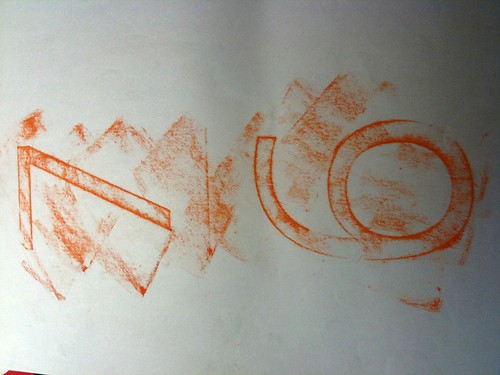
frottage /FRAW-tawzh/. noun. Taking a rubbing from a textured surface, such as from a gravestone. Sexually touching or rubbing, while clothed, against someone. From French frotter (rub, scrub, scrape, caress).
[Read more…]

flesh-pot (fleshpot). noun. Literally, a pot in which flesh (a highly desirable foodstuff) is boiled, generally referring to the phrase in Exodus (see below). As an allusion, a place or person of luxury, indulgence and titillation.
[Read more…]
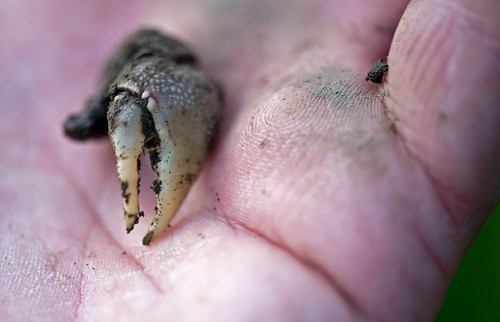
/aw-TAW-tə-mee/. noun. The reflexive casting off (or ejection) of a body part in response to being attacked. Colloquially, if such a word can be said to be used that way!, self-amputation.
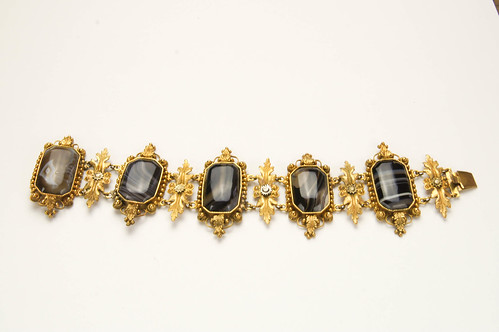
pinchbeck /pinsh-bek/. noun or adjective. An inexpensive copper alloy that looks like gold. A counterfeit or a sham. The word first appears in the 1500s referring to a miserly person, of unknown origin. But it reappears in the 1700s as the name of an alloy used by jeweler and watchmaker Christopher Pinchbeck to make inexpensive products with the appearance of gold, over time coming to be known generically as a synonym for cheap and/or spurious.
[Read more…]

/GAWB/. noun. A lump or mouthful of something. Slang for the mouth. In mining: a seam or area emptied of valuable material and/or the waste material used to fill such an area back in.