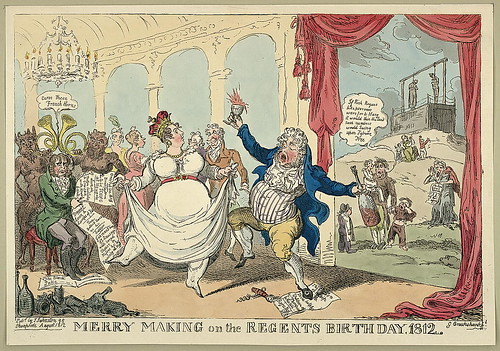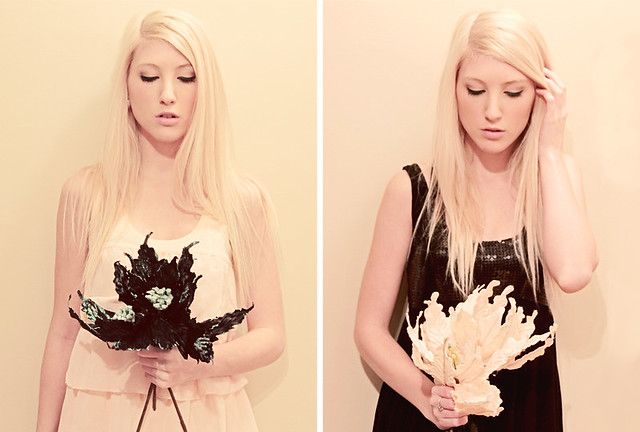
litotes /LIY-toh-teez/. noun. A figure of speech using understatement to express an affirmative by negating its opposite. The description sounds more complicated than the simply reality in use: it is basically the opposite of hyperbole. “Warren Buffett isn’t too bad off,” is an example, as would be John Coltrane saying he “played the sax a little.” If you’ve ever used a phrase like, “he wasn’t the sharpest tool in the shed,” then you employed litotes. From Greek litotes (simplicity); from litos (small). See also: meiosis, which includes understatement of other kinds.
[Read more…]
Persons, places, things...you know the drill.
interoception
interoception /in-tair-oh-SEP-shən/. noun. The sense of conditions and stimuli within the body. Compare to exteroception (the sense of stimuli acting on the body) and proprioception (the sense of the position of the body, and parts of the body, to other bodies or parts of the body).
[Read more…]
cuckold
cuckold /KUK-əld/. noun or verb. A man whose spouse has been unfaithful or the act making a cuckold of someone. Of late, a scornful political term embraced most strongly by white nationalists to describe their opponents, often abbreviated as cuck. From Middle English cukeweld (same meaning), from Old French cucuault: cocu (cuckoo) + pejorative suffix -ault.
The interesting aspect of the etymology is its roots in the behavior of the female cuckoo bird, some of which lay their eggs in the nests of—and leave them to be cared for by—other birds, leading to the figurative word we are becoming all too familiar with today.
[Read more…]
cark
cark /kark/. verb or noun. To vex, burden or harass…or to suffer from such. Also: a trouble, a burden, a weight. From Latin carcare (to load a wagon), from Latin carrus (wagon). Less commonly, to die, originally an Australian colloquialism, possibly derived from the caw of the carrion crow.
[Read more…]
palimpsest
palimpsest /PAL-imp-sest/. noun or adjective. A manuscript or artwork which has been erased, scraped or washed off and overwritten, leaving traces of the original. More generally, something that has been reused or altered but bears evidence of the original. Owing to its durability (and expense), most existing written palimpsests are found on parchment or vellum manuscripts. Many texts only survive in this form. Use of the word has expanded into astronomy, medicine, archaeology and even augmented reality.
[Read more…]
tarantism
tarantism /TAIR-ən-tiz-əm/. noun. A nervous disorder that causes uncontrollable bodily movement; an extreme, even uncontrollable, urge to dance. Derived from tarantula, whose bite was commonly thought to be the cause of the problem. From Latin Tarentum (a town in southern Italy), popularly associated with tarantola (tarantula). || See also: tarantella, a rapid whirling southern Italian dance.
[Read more…]
panjandrum
panjandrum /pan-JAN-drəm/. noun. A powerful, usually pompous and overbearing, official. Also, rarely, a rocket-propelled cart used during World War II. The word was supposedly created by playwright Samuel Foote as part of a nonsense line to put to the test actor Charles Macklin’s claim to remember anything upon hearing it once (see first example below).
[Read more…]
- « Previous Page
- 1
- …
- 12
- 13
- 14
- 15
- 16
- …
- 29
- Next Page »