


/PEENG-oh/. noun. (also called a hydro- or cryo-laccolith, if you want to get all sciency about it) is a conical or dome-shaped earth mound of soil-covered ice.
/PEENG-oh/. noun. (also called a hydro- or cryo-laccolith, if you want to get all sciency about it) is a conical or dome-shaped earth mound of soil-covered ice.

palimpsest /PAL-imp-sest/. noun or adjective. A manuscript or artwork which has been erased, scraped or washed off and overwritten, leaving traces of the original. More generally, something that has been reused or altered but bears evidence of the original. Owing to its durability (and expense), most existing written palimpsests are found on parchment or vellum manuscripts. Many texts only survive in this form. Use of the word has expanded into astronomy, medicine, archaeology and even augmented reality.
[Read more…]
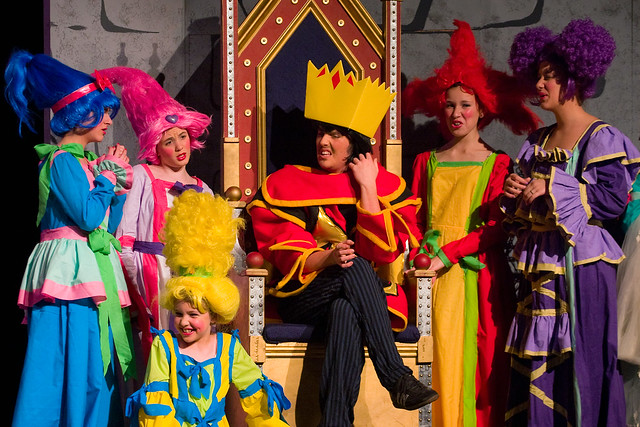
panjandrum /pan-JAN-drəm/. noun. A powerful, usually pompous and overbearing, official. Also, rarely, a rocket-propelled cart used during World War II. The word was supposedly created by playwright Samuel Foote as part of a nonsense line to put to the test actor Charles Macklin’s claim to remember anything upon hearing it once (see first example below).
[Read more…]
pandiculation /pan-dik-yoo-LAY-shən/. noun. Stretching and yawning, as when first waking up. Rarely, just yawning. From Latin pandiculari, from pendere (to stretch).
[Read more…]
ploce /PLAW-see/. noun. A figure of speech in which a word is emphatically repeated to bring attention to a particular attribute or quality. Latin, from Greek plokē (complication) from plekein (to plait). See also symploce, the repetition of words or phrases at the beginning and end of successive clauses, such as G.K. Chesterton’s “The madman is not the man who has lost his reason. The madman is the man who has lost everything except his reason.”
[Read more…]
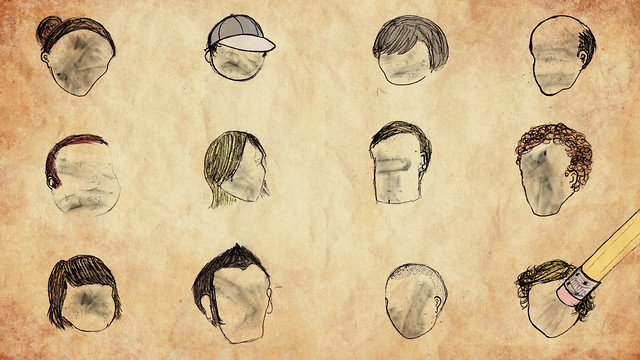
prosopagnosia /praws-ə-pag-NOH-zhyə/. noun. An inability to recognize familiar, or what should be well-known, faces. Commonly(ish) known as “face blindness.” From Greek prosōpon (face) + a (without) + gnōsis(knowledge).
[Read more…]
pother (alt. puther) /PAW-t~her/. noun or verb. A vocal commotion; loud turmoil; a thick cloud of dust or smoke. As a verb, to cause a pother (naturally) but also to trouble one/oneself over a mundane or trivial matter. Origin unknown, but likely derived from the rhyming bother. See also: dither, ado, tizzy, flap and hurly-burly.
[Read more…]